Going vegan reduces your environmental impact
by Jack Norris, Registered Dietitian, Executive Director of Vegan Outreach | Last updated: September 2026
Contents
- Introduction
- Climate and air quality
- Land and water
- Conclusion
- Appendix A: Animal agriculture’s greenhouse gas emissions
- Appendix B: Grass-fed beef and climate change
- Appendix C: Reducing U.S. greenhouse gases by going vegan
- Appendix D: Land requirements of cow’s milk vs. soymilk
- Appendix E: Plant-based diet excerpts from IPCC reports
- Appendix F: Nitrous oxide and fertilizer
- Bibliography
Introduction
Animal agriculture is a leading driver of greenhouse gas (GHG) emissions, air pollution, deforestation, and water use. With so many alternatives available, making choices that help the environment is easier than ever.
For example, the vegan Beyond Burger has protein comparable to a U.S. beef patty, but requires 97% less land, 92% less water, generates 88% fewer greenhouse gas emissions, and uses 28% less non-renewable energy (Heller, et al., Blonk, 2025).
Vegan diets have the smallest environmental footprint—lower greenhouse gas emissions and reduced land and water use—relative to an average diet, a healthy diet, a Mediterranean diet, and a healthy vegetarian diet in the United States (Jennings et al., Nutrients, 2023), and a lacto-ovo-vegetarian, a pescatarian, and a meat-containing diet in the United Kingdom (Scarborough et al., Nature Food, 2023) and Ireland (Burke et al., Environmental Research, 2025).
Even when entirely organic, meat-based diets have higher environmental impacts than plant-based diets (Rabes et al., Sustainable Production and Consumption, 2020). Dairy’s large environmental impact makes lacto-ovo-vegetarian diets more environmentally harmful than vegan diets (Kim et al., Global Environmental Change, 2020). Fishing is also implicated; commercial fishing that uses bottom trawling disturbs carbon stores in the ocean floor and significantly contributes to greenhouse gas emissions and ocean acidification (Attwood et al., Frontiers, 2024).
Climate and air quality
Why animal agriculture emits more
Animal agriculture contributes significantly more to global warming than growing plant foods, through three main mechanisms:
1. Methane from ruminant digestion and manure. Methane is a far more potent greenhouse gas than CO2 in the short term. Cattle, sheep, and other ruminants burp large amounts of it as they digest fibrous plant matter, and manure from all livestock — ruminant and non-ruminant alike — releases additional methane as it decomposes, especially in the liquid lagoon systems used by confined pig and dairy operations. That’s why even animals raised in a system that’s technically carbon-neutral still contribute to global warming (see Background and terminology).
2. Land cleared for grazing and feed. This has two parts. Each year, newly cleared forest and grassland converted to grazing or feed cropland adds carbon directly to the atmosphere. Separately, the land already used for grazing and feed crops represents forgone carbon sequestration — carbon that forests and grasslands could otherwise be storing if that land reverted to its natural state. The first is an ongoing emission; the second is better described as a missed climate benefit, which is why estimates that include it roughly double animal agriculture’s share of global emissions compared to estimates that don’t (see Carbon opportunity cost).
3. More synthetic nitrogen fertilizer for grain-fed animals. Animals convert feed into meat and eggs inefficiently, so producing a given amount of food from grain-fed and confined animals — pigs, poultry, farmed fish, and grain-finished cattle — takes more cropland than producing the same nutrition directly from plants. That cropland runs largely on synthetic nitrogen fertilizer, and applying it releases nitrous oxide — a potent greenhouse gas (see Nitrous oxide and fertilizer).
Together, these three mechanisms explain why animal-based diets have a larger climate footprint than plant-based diets.
Peer-reviewed estimates attribute roughly 15–20% of annual global greenhouse gas emissions to animal agriculture; including potential carbon sequestration on land that’s currently used for grazing and feed crops would roughly double this contribution (see Appendix A: Animal agriculture’s greenhouse gas emissions). Reducing global warming will likely require substantial shifts in the global food system towards plant-based diets (Clark, et al. Science, 2020).
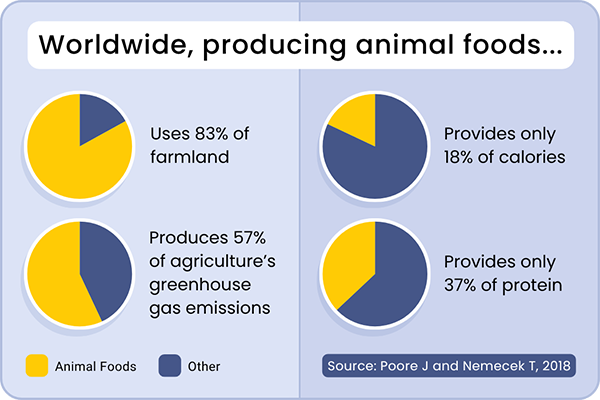
Vegan diets were found to provide the lowest per capita greenhouse gas emissions in 97% of the 140 countries studied (in 3%, a low-food-chain diet, in which insects, forage fish, and bivalves replace a portion of other animal products, had the fewest emissions; Kim et al., Global Environmental Change, 2020). Although meat, dairy, eggs, and aquaculture supply 37% of dietary protein and 18% of calories, they contribute 56–58% of food-related greenhouse gas emissions (Poore and Nemecek, Science, 2018).
The table below compares greenhouse gas emissions for a range of staple foods.
Greenhouse gas emissions of common foods
| Food | kg CO₂eq / 100g protein | kg CO₂eq / 1,000 kcal |
|---|---|---|
| Tree nuts | 0.26 | 0.07 |
| Peanuts | 1.23 | 0.56 |
| Wheat & rye | 1.29 | 0.59 |
| Corn | 1.79 | 0.38 |
| Oats | 1.91 | 0.95 |
| Tofu | 1.98 | 1.17 |
| Potatoes | 2.71 | 0.63 |
| Eggs | 4.21 | 3.24 |
| Poultry | 5.70 | 5.34 |
| Fish (farmed) | 5.98 | 7.61 |
| Rice | 6.27 | 1.21 |
| Pork | 7.61 | 5.15 |
| Milk | 9.50 | 5.25 |
| Cheese | 10.8 | 6.17 |
| Lamb | 19.9 | 12.5 |
| Beef | 49.9 | 36.4 |
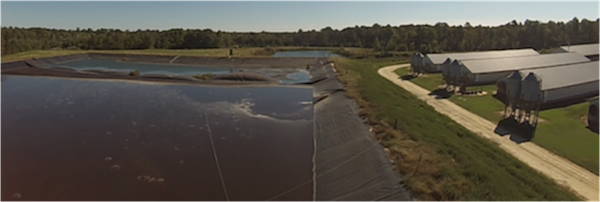
Hog and dairy farms produce enormous waste, which is often stored in lagoons and then sprayed onto fields, degrading the quality of life in nearby communities. People living near large beef, dairy, and hog farms are exposed to high levels of fine particulate matter (Chamanara et al., Communications Earth & Environment, 2025). Global adoption of vegan diets could prevent an estimated 236,000 premature deaths annually from improved air quality (Springmann et al., Nature Communications, 2023).
See Appendix B: Grass-fed beef and climate change for an explanation of why grass-fed beef is sometimes promoted as a solution to climate change. Summary: Under ideal conditions, which seldom exist, producing grass-fed beef can emit fewer greenhouse gases than feedlot beef. It can also sequester some carbon, but only partially offset what it emits. Even with that sequestration credited, grass-fed beef emits substantially more greenhouse gases than plant-based foods and isn’t a realistic climate solution. And for the United States to eat the same amount of beef exclusively from grass-fed cattle, about 30% more cattle would be needed, significantly increasing land use and raising total U.S. methane emissions by an estimated 8%.
See Appendix C: Reducing U.S. greenhouse gases by going vegan for a breakdown of how much a vegan diet can reduce your personal carbon footprint, how that compares to switching to an electric vehicle, and why a widely-cited claim understates the impact of going vegan in the United States.
Land and water
Producing meat, dairy, eggs, along with aquaculture, uses about 83% of the world’s farmland but provides only 37% of the protein and 18% of the calories (Poore and Nemecek, Science, 2018). Replacing animal products with nutritionally comparable plant-based alternatives in the United States alone could feed an additional 350 million people (Shepon et al., Proceedings of the National Academy of Sciences, 2018).
The table below compares land use for a range of staple foods.
Land use of common foods
| Food | m² / 100g protein | m² / 1,000 kcal |
|---|---|---|
| Tofu | 2.2 | 1.3 |
| Corn | 3.1 | 0.65 |
| Wheat & rye | 3.2 | 1.4 |
| Peanuts | 3.5 | 1.6 |
| Fish (farmed) | 3.7 | 4.7 |
| Rice | 3.9 | 0.76 |
| Potatoes | 5.2 | 1.2 |
| Eggs | 5.7 | 4.4 |
| Oats | 5.9 | 2.9 |
| Poultry | 7.1 | 6.6 |
| Tree nuts | 7.9 | 2.1 |
| Pork | 11 | 7.3 |
| Milk | 27 | 15 |
| Cheese | 40 | 23 |
| Beef | 164 | 119 |
| Lamb | 185 | 117 |
Although not as stark a difference as for emissions and land use, a diet that excludes animal products can save 19% of freshwater globally (Poore and Nemecek, Science, 2018). The reduction is much larger in the United Kingdom, where a vegan uses only 53% as much water as someone eating a medium amount of meat (Scarborough et al., Nature Food, 2023). This is likely because UK diets include substantially more dairy than the global average, and dairy — especially cheese — has an outsized water footprint.
In the Southwestern United States, the Colorado River supports 40 million people, yet chronic overuse has depleted its reservoirs; 46% of its direct water use goes to hay for cattle (Richter et al., Communications Earth & Environment, 2024).
The table below compares water use for a range of staple foods.
Water use of common foods
| Food | Freshwater (L) / 100g protein | Freshwater (L) / 1,000 kcal | Scarcity-weighted (L) / 100g protein | Scarcity-weighted (L) / 1,000 kcal |
|---|---|---|---|---|
| Tofu | 93 | 55 | 3,196 | 1,887 |
| Poultry | 381 | 357 | 8,186 | 7,664 |
| Corn | 227 | 48 | 11,435 | 2,402 |
| Oats | 371 | 184 | 14,451 | 7,162 |
| Potatoes | 348 | 81 | 16,201 | 3,763 |
| Eggs | 521 | 401 | 16,206 | 12,488 |
| Beef | 728 | 532 | 17,419 | 12,723 |
| Fish (farmed) | 1,619 | 2,062 | 18,229 | 23,225 |
| Peanuts | 708 | 319 | 23,605 | 10,655 |
| Wheat & rye | 531 | 242 | 27,365 | 12,479 |
| Pork | 1,110 | 751 | 41,327 | 27,978 |
| Milk | 1,904 | 1,047 | 59,958 | 32,977 |
| Rice | 3,167 | 610 | 69,826 | 13,450 |
| Lamb | 901 | 569 | 70,927 | 44,771 |
| Cheese | 2,539 | 1,448 | 81,907 | 46,731 |
| Tree nuts | 2,531 | 672 | 140,778 | 37,380 |
Conclusion
Your environmental footprint can be drastically reduced on a plant-based diet. Please see Help animals by eating delicious food! to learn how you don’t need animal foods to be healthy or to have high-protein, satisfying meals.
Note: I used AI extensively throughout this article — to search for and read primary sources, check calculations, verify citations, and catch errors, including one significant one I’d missed despite reading the same section many times. I also used it to draft and revise text. Every editorial decision — what to include, how to weigh a contested source, when a caveat mattered enough to keep — remained mine.
Appendix A: Animal agriculture’s greenhouse gas emissions
This appendix reviews estimates of animal agriculture’s annual contribution to human-driven greenhouse gas (GHG) emissions. Peer‑reviewed sources attribute approximately 15–20% of annual greenhouse gas emissions to animal agriculture; this share roughly doubles when including the carbon that could be sequestered by eliminating animal agriculture and allowing grazing and feed‑crop land to revert to its natural state.
FAO’s estimate of livestock’s greenhouse gas emissions
In 2006, the Food and Agriculture Organization (FAO) of the United Nations wrote in the Executive Summary of their report, Livestock’s Long Shadow (FAO, 2006):
The livestock sector is a major player, responsible for 18 percent of greenhouse gas emissions measured in CO2 equivalent. This is a higher share than transport.
Plant-based diet advocates widely cited the claim that animal agriculture’s emissions are higher than transport as proof that animal agriculture significantly harms the environment, though many argued that the FAO’s estimate was much too low. Seven years later, the FAO downgraded its estimate in the Overview of Tackling Climate Change Through Livestock (FAO, 2013):
With emissions estimated at 7.1 gigatonnes CO2-eq per annum, representing 14.5 percent of human-induced greenhouse gas emissions, the livestock sector plays an important role in climate change.
Since then, numerous estimates of the percentage of annual emissions attributed to animal agriculture have been published; this appendix reviews the most widely discussed estimates.
Background and terminology of greenhouse gas emissions
For anyone not familiar with the background and terminology of climate science, this section should make the estimates easier to understand.
The term greenhouse gas emissions usually refers to human-driven emissions. In this appendix, unless otherwise stated, emissions refer to human-driven greenhouse gas emissions, and the percentage of emissions attributable to animal agriculture is on an annual basis.
Water vapor is the most common greenhouse gas, responsible for approximately half of the heat trapped in the Earth’s atmosphere (MIT Climate Portal, 2023). The only direct, significant production of water vapor from human activity is from contrails—water vapor that forms behind high-flying jet planes that persist under some conditions (Yale Environment 360, 2019). Water vapor usually isn’t included in greenhouse gas estimates, which focus on the other three most prevalent greenhouse gases: carbon dioxide (CO2), methane (CH4), and nitrous oxide (N2O). While water vapor usually isn’t included in estimates of human-driven greenhouse gases, it’s increasing in the atmosphere due to the warming of the oceans driven by human-caused global warming (NASA, 2024).
Annually, the amount of CO2 naturally released into the atmosphere, approximately 210 Gt of carbon (769 Gt of CO2), is many times greater than that released by human activities. Because this CO2 is in balance with what’s removed from the air, mainly by photosynthesis (Carbon Flux, University of Calgary), it’s not included in estimates of greenhouse gas emissions. To compare, the amount of human-driven emissions in 2023 was 54 Gt of CO2 equivalents (Ritchie, 2024; using GWP-100).
Until 1750, the atmospheric concentrations of the two leading greenhouse gases, CO2 and methane, remained stable: they were emitted into the atmosphere and removed in about equal amounts. After 1750, human activity has steadily increased CO2 levels, mainly through the burning of fossil fuels and, to a lesser extent, deforestation.
Humans have also increased the amount of methane in the atmosphere by raising large numbers of ruminant livestock and rice, creating landfills, and burning natural gas (which is 70–90% methane; NASA, 2024). By raw weight, methane has a much higher, short-term warming impact than CO2; because of this, even if ruminant animals are raised in a carbon-neutral system (where the amount of carbon they release is equal to the amount of carbon removed by photosynthesis by the plants they eat), they’ll still contribute to global warming.
Some argue that ruminant methane is part of a natural cycle that wild ruminants would sustain anyway. This has a kernel of truth: because methane breaks down within about a decade, a herd that stays the same size adds little further warming after its first few decades (Lynch et al., Environ Res Lett, 2020). But that herd keeps temperatures elevated, so the real question is what a world without ranching would look like. Wild animals are unlikely to take the cattle’s place at anything like current numbers. Livestock, dominated by cattle and pigs, weigh roughly an order of magnitude more than all wild mammals alive today. Even if wild land mammals recovered to the abundance estimated for before the megafauna extinctions of the last 50,000 years or so, ruminant livestock alone would still outweigh them by about four times (Bar-On et al., PNAS, 2018; calculated from the authors’ data). In fact, total mammal biomass is now about four times its level before large-scale human impacts, because of the growth of humans and their livestock (Bar-On et al., 2018). Where herds shrink and wild animals don’t fill the gap, methane emissions fall, and cutting methane emissions can reverse a significant share of recent warming over relatively short timescales (Lynch et al., 2020).
Lagoons add a methane source that exists only where animals are confined. The IPCC explains that manure stored as a liquid decomposes without oxygen and can produce a significant quantity of methane, whereas manure left on pasture decomposes with more oxygen and produces less methane (Gavrilova et al., IPCC, 2019, p. 10.50). The gap is large: by IPCC default factors for high-productivity dairy cattle, lagoon-stored manure yields roughly 80–130 g of methane per kg of organic matter, versus about 0.6 g on pasture, less than 1% as much (Gavrilova et al., IPCC, 2019, Table 10.14). Across livestock generally, methane from manure is smaller than methane from digestion, with the most substantial manure emissions coming from confined operations that handle manure as a liquid (Gavrilova et al., IPCC, 2019, p. 10.10). On dairies with lagoons, though, manure can be the bigger source: a review of field measurements found lagoons emitting an average of about 370 kg of methane per cow per year, roughly three times the IPCC’s estimate of about 120 kg per cow from digestion, with results varying widely across sites (Owen and Silver, Glob Chang Biol, 2015). Overall, manure is estimated to account for 43% of dairy methane in the United States and 54% in California (USDA, 2011; CARB, 2011, as cited in Owen and Silver, 2015).
Global warming potential (GWP) of methane
Greenhouse gases aren’t measured by the quantity of molecules, but rather by mass. The masses of different gases aren’t commonly compared in a one-to-one ratio; rather, they’re adjusted to reflect their contributions to global warming relative to CO2 by multiplying their mass by a global warming potential (GWP), which can vary depending on the timeframe being considered. By convention, CO2 is assigned a GWP of 1.
Methane’s tetrahedral shape gives it more ways to absorb infrared light than CO2’s linear structure (MIT Climate Portal, 2023). Per mass, methane also has 2.7 times as many molecules as CO2, but I haven’t seen this cited as a basis for adjusting its GWP.
Most climate change models use a 100-year timeframe, expressed as GWP-100. Methane’s GWP-100 is about 28. To calculate the amount of methane “emissions” produced by an activity, its mass is multiplied by 28, stated in CO2 equivalents (CO2eq or CO2e).
Atmospheric methane degrades to CO2 in 7–12 years, whereas CO2 doesn’t degrade for hundreds of years (NASA, 2025). This means that using a GWP timeframe of 10–20 years, rather than 100 years, increases the amount of CO2eq represented by methane. Methane’s GWP-20 is about 84 (IPCC 2013 AR5 WG1 Table 8.7).
Climate scientists recognize that 100 years is somewhat arbitrary. Some advocates maintain that we need to act within a short timeframe to curb climate change and, therefore, a GWP-20 is more appropriate. Since methane is a large portion of animal agriculture’s emissions, they argue that when using a GWP-20, animal agriculture accounts for a significantly higher amount of global emissions. However, this doesn’t actually appear to be the case. In the mid-2000s, animal agriculture emitted 37% (Goodland and Anhang, 2009, p. 13) to 44% (FAO, 2013, 3.1, p. 15) of human-caused methane, and given the mixture of greenhouse gases from various sectors then, switching from GWP-100 to GWP-20 doesn’t drastically increase the percentage of its global emissions.
Goodland and Anhang (2009) of World Watch wrote a well-known critique of the FAO’s estimate. They used a GWP-20, which increased methane emissions from animal agriculture from 2.4 to 7.4 Gt CO2eq. However, they didn’t apply a GWP-20 to methane from other sources, saying, “Further work is needed to recalibrate methane emissions other than those attributable to livestock products using a 20-year timeframe (p. 14).” I estimate these additional methane emissions to be 8.6 Gt CO2eq (calculations). For this and other reasons, Goodland and Anhang conclude that at least 51% of annual global greenhouse gas emissions are attributable to livestock products, but this percentage decreases to 44% when additional methane emissions are included.
One way to estimate the impact of methane without needing a GWP factor is to use radiative forcing. I do this below in Radiative forcing.
Carbon opportunity cost (COC)
Another consideration is that much of the land currently used for grazing animals and growing animal feed could be reverted to forests and grasslands, which could store massive amounts of carbon, a process known as carbon sequestration or the carbon opportunity cost (COC).
The FAO’s estimate of animal agriculture’s contribution to greenhouse gas emissions doesn’t include any amount for COC. In contrast, Goodland and Anhang include a significant amount of COC (11.4 Gt CO2eq per year). Another critique of the FAO is provided by Rao (2020), who adds 34.5 Gt CO2eq per year to animal agriculture’s emissions, resulting in an estimate that animal agriculture is responsible for at least 87% of annual emissions.
Hayek et al. (Nature Sustainability, 2021) estimate that animal agriculture is responsible for a total (as distinct from per year) COC of 152.5 Gt of carbon (559 Gt CO2) and, as a result, replacing animal agriculture with a vegan diet could sequester 547 Gt CO2; this would have to be done over the course of many years.
Poore and Nemecek (Science, 2018) estimate that if the food system were completely plant-based, 8.1 Gt CO2 could be sequestered annually for 100 years, for a total of 810 Gt CO2. Poore and Nemecek’s erratum (2019) states that eliminating animal products delivers a 49% reduction in food’s annual GHG emissions (6.6 Gt CO2eq) for a 2010 reference year—about 12.5% of total global emissions that year. Combined with the additional 8.1 Gt CO2 in annual carbon sequestration from freed-up land, the erratum states that the “no animal products” scenario delivers a 28% reduction in global greenhouse gas emissions across all sectors of the economy—more than double the direct reduction alone.
Other estimates of animal agriculture’s emissions
This section reviews notable estimates of animal agriculture’s contribution to greenhouse gas emissions. Table A.1 includes peer-reviewed estimates that provide, or allow for the easy calculation of, the percentage of greenhouse gas emissions from animal agriculture; similar reports reviewed below lacked the detail needed for inclusion in Table A.1.
Table A.1 Annual contribution of animal agriculture to global emissions
| Emission category | FAO | Poore | Xu |
|---|---|---|---|
| Food production emissions from animal foods | 56–58% | 57% | |
| Global emissions from food production | 26% | 35% | |
| Global emissions from animal foods | 14.5% | 14.8%* | 20.0%* |
| Carbon opportunity cost (COC) | 8.1 Gt CO2 | ||
| Global emissions from animal foods plus COC | 28% |
Poore and Nemecek (Science, 2018) conducted an in-depth analysis of the lifecycles for a wide range of foods (based on GWP-100), and estimate that animal foods account for 56–58% of food-related emissions. With food production accounting for 26% of total emissions, animal foods are responsible for 15% of total emissions. As mentioned previously, Poore and Nemecek also estimate that 8.1 Gt of CO2eq could be sequestered per year if the food system were completely plant-based, resulting in “a 28% reduction in global greenhouse gas emissions across all sectors of the economy relative to 2010 emissions.”
Xu et al. (Nature Food, 2021) quantified CO2, methane, and nitrous oxide emissions from the production and consumption of all foods using a method that “builds upon and extends the data and methods published in the literature by implementing them into the Integrated Science Assessment Model (ISAM).” In other words, they attempted a more comprehensive accounting and categorization of greenhouse gases than previous estimates. Using a 100-year GWP, Xu et al. estimate that animal foods account for 57% of food-related emissions and that food production accounts for 35% of total greenhouse gases, making animal foods responsible for 20% of the total.
Twine (Sustainability, 2021) argues that the FAO’s analysis doesn’t always use the same sources and years for livestock emissions as it does for total emissions. After matching them, animal agriculture accounts for at least 16.5% of total emissions.
The Intergovernmental Panel on Climate Change (IPCC) is widely regarded as the most authoritative source on climate change. The IPCC regards plant-based diets as a generally effective way to reduce emissions, where they can be implemented and if low-emission plant-based foods replace animal foods (see Appendix E: Plant-based diet excerpts from IPCC reports). They cite Springmann et al. (2016) in estimating that vegan diets could reduce annual emissions by about 8.0 Gt CO2eq (IPCC 2019 Special Report: Climate Change and Land, Chapter 5, Figure 5.12, p. 488). The IPCC doesn’t address COC.
Springmann et al. (Nature Communications, 2023) estimate that switching to a vegan diet could reduce global agricultural emissions by 84–86% in 2030, apparently on an annual basis. They appear to use a GWP-100 without including any COC. Using Poore and Nemecek’s estimate that food production is 26% of total emissions, changing to a vegan diet could reduce total greenhouse gases by about 22%, not including COC.
Wedderburn-Bisshop (Environmental Research Letters, 2025) estimates the cumulative increase in greenhouse gas emissions from various sectors between 1750 and 2020, finding that agriculture has been responsible for 60% and animal agriculture responsible for 86% of agricultural emissions, making animal agriculture responsible for 52% during that period. Wedderburn-Bisshop’s methods differ from other estimates by using gross emissions from land-use changes (rather than net emissions), using radiative forcing rather than a GWP, and including cooling and warming from aerosols.
Radiative forcing
Radiative forcing refers to the heating (or cooling) effect caused by gases in the atmosphere, and is often mentioned in discussions of animal agriculture’s climate impact. Because I haven’t found a peer‑reviewed estimate of animal agriculture’s annual contribution to radiative forcing, I estimate its contribution to the radiative forcing of the three main human-driven greenhouse gases (CO2, CH4, and N2O) below. Using radiative forcing avoids the need to select a GWP timeframe; however, because radiative forcing is time‑dependent, a single‑year estimate doesn’t capture the longer‑term impact.
The EPA provides a table of the annual increases in radiative forcing for the various greenhouse gases. CO2, methane, and nitrous oxide account for 98.8% of radiative forcing (calculations). Averaging the annual increase of radiative forcing of these gases for the most recent 10 years of data (2014-2023) and multiplying by the proportion of that gas’s emissions that come from animal agriculture suggests that the annual fraction of the radiative forcing of CO2, methane, and nitrous oxide attributable to animal agriculture is 13% (calculations).
For this estimate, I had to use the FAO’s percentages of CO2 contributed by animal agriculture, which would be considered too low by some (Goodland and Anhang, 2009). Including COC would result in a 27% mitigation of annual emissions by eliminating animal agriculture (calculations).
The net radiative forcing of the planet can be affected by aerosols, which can cool or warm, depending on the type and color of the particle (NASA, 2023). Although aerosols affect global warming, I haven’t seen a model that quantifies their net impact across sectors on an annual basis. Wedderburn-Bisshop (2025) includes aerosols in his estimate of cumulative emissions from 1750 to 2020, attributing a 70% degree of uncertainty to their radiative forcing.
My estimate that animal agriculture accounts for 13% of the radiative forcing of CO2, CH4, and N2O is relatively close to Poore and Nemecek’s estimate that animal agriculture’s share of emissions is 14.8%, indicating little difference when using radiative forcing.
Conclusion
The share of annual emissions attributed to animal agriculture varies depending on what is included, with COC being the largest variable. Peer-reviewed sources estimate that animal agriculture accounts for approximately 15–20% of annual greenhouse gas emissions. This amount can be roughly doubled if the land used for animal agriculture is allowed to revert to its natural state.
Appendix B: Grass-fed beef and climate change
Most U.S. beef cattle spend their final months on feedlots, “finished” on grain; other cattle, known as grass-fed, eat only forage their entire lives and typically spend most of that time on pasture (USDA rules only require pasture access during the growing season, defined as the frost-free period; Vol. 72, No. 199, October 16, 2007). The forage that grazing cattle eat generates more methane than does feed, and because grazing cattle grow more slowly than feedlot‑finished cattle, they emit more methane for a longer period. While feedlot‑finished beef has substantially higher greenhouse gas emissions than plant-based foods, it typically has lower emissions than grass-fed beef.
Despite grass-fed beef’s typically higher methane production, some argue it can be a climate solution. The idea gained momentum from biologist Allan Savory’s 2013 TED Talk, How to green the world’s deserts and reverse climate change. Savory claims desertification is a major driver of climate change (through loss of carbon into the atmosphere), but that blaming livestock grazing is misleading. He says the way to combat desertification is to use livestock to mimic the historic, tightly bunched, migrating herds of wild ruminants on grasslands. He developed methods for ranchers to do this and showcases dramatic before-and-after images of formerly desertified land that had been turned into grasslands. Savory suggests that applying his methods to half the world’s grasslands offers the best hope for addressing climate change.
Is Savory correct?
To combat climate change, grazing must yield a net reduction of CO2-equivalent emissions. Carbon is part of a cycle in which plants absorb carbon as CO2, and then animals eat the plants and either store their carbon in tissues or emit it as CO2 and methane. Carbon sequestration—the long-term storage of carbon in soils and plants—is the only way in which grass-fed beef can decrease atmospheric carbon. Carbon sequestration can occur when soils increase the amount of organic matter and dung, grasses grow deeper roots, or additional non-grazed plants thrive. But there’s a key limit: only carbon-depleted soils can store much additional carbon, and once they approach saturation, grazing systems will no longer be negative carbon emitters. Additionally, methane is a carbon-based gas that is more potent but shorter-lived than CO2 (it degrades to CO2 after 7–12 years; NASA, 2025). For a grazing system to reduce global warming, it would have to sequester enough carbon to offset the warming caused by the methane it emits.
How much carbon can improved grazing actually sequester? Extensive research says: not much.
Eshel et al. compared grass-fed to industrial beef and other proteins (Proceedings of the National Academy of Sciences, 2025) and concluded that even with optimistic rangeland sequestration, grass-fed beef isn’t less carbon-intensive than industrial beef and is 3–40 times as carbon-intensive as most plant and animal alternatives.
Cusack et al. analyzed 292 comparisons across regions (Global Change Biology, 2021) and found that while efficiency gains and land-based carbon sequestration can reduce beef’s emissions, expecting maximal global adoption is unrealistic; therefore, such strategies should complement efforts to curb the growing demand for beef. In their own direct comparison, grazed beef emitted 30% more greenhouse gases than feedlot-finished beef per unit of beef — but that comparison mostly pitted feedlots against ordinary, low-intensity grazing rather than the high-intensity, well-managed rotational grazing that showed the most promise elsewhere in their analysis, so the authors say it likely underestimates what well-managed grazing could achieve. They point to one Midwestern U.S. study as an example: an intensive rotational grazing system with high enough soil carbon sequestration to reach net-zero emissions over two years, compared with net-positive emissions from a nearby feedlot — calling it one of the few studies to compare feedlots with alternative grazing practices directly. This is the kind of case Eshel and colleagues later addressed directly, after critics cited it as a counterexample to their findings (described above); they acknowledged that “in exceptional individual sites, grazing may indeed substantially enhance carbon sequestration,” while maintaining that such cases are too rare to affect their overall conclusion (Eshel et al., PNAS, 2025; Apanovich and Weeks, PNAS, 2025). Cusack et al. caution that soil carbon sequestration rates typically decline after their initial gains: in one study they cite, carbon stocks rose for six years after degraded cropland was converted to intensive rotational grazing, then plateaued; in another, gains continued for 13 years before leveling off. Even a system that reaches net-zero emissions in its early years, in other words, isn’t likely to stay there indefinitely.
For the United States to eat the same amount of beef, a shift to grass-fed beef would require about 30% more cattle, significantly increasing land use and raising total U.S. methane emissions by an estimated 8% (Hayek and Garrett, Environmental Research Letters, 2018).
The Food Climate Research Network’s Grazed and Confused (2017) report notes that well-managed systems can sequester some carbon, sometimes offsetting emissions, yet concludes that grass-fed livestock aren’t a climate solution. As lead author Dr. Tara Garnett put it: “Ultimately, if high consuming individuals and countries want to do something positive for the climate, maintaining their current consumption levels but simply switching to grass-fed beef is not a solution. Eating less meat, of all types, is (press release).”
In summary, under ideal conditions, which seldom exist, producing grass-fed beef can emit fewer greenhouse gases than feedlot beef. It can also sequester some carbon, but only partially offset what it emits. Even with that sequestration credited, grass-fed beef emits substantially more greenhouse gases than plant-based foods and isn’t a realistic climate solution.
Appendix C: Reducing U.S. greenhouse gases by going vegan
An article in Newsweek, Don’t bother going vegan to save the planet. Do this instead (January 25, 2025), says that if everyone in the United States went vegan, the country’s greenhouse gas (GHG) emissions would decrease by only 2.6%. The author cites an article from the Clarity and Leadership for Environmental Awareness and Research (CLEAR) Center at UC Davis, What if the United States stopped eating meat? (December 20, 2020):
In 2017, Professors Mary Beth Hall and Robin White published an article regarding the nutritional and greenhouse gas impacts of removing animals from U.S. agriculture. Imagining for a moment that Americans have eliminated all animal protein from their diets, they concluded such a scenario would lead to a reduction of a mere 2.6 percent in greenhouse gas (GHG) emissions throughout the United States.
CLEAR’s description of White and Hall’s analysis is misleading. White and Hall determined the amount of greenhouse gases that would be reduced if all animal agriculture were replaced by plant agriculture, at maximum U.S. agricultural capacity. However, if everyone in the United States went vegan, U.S. agriculture could reduce operations (and emissions) while feeding the same number of people.
Here are some estimates for how much vegan diets can reduce greenhouse gases in the United States:
- Poore and Nemecek (Science, 2018) estimate that the population becoming vegan could reduce food-related emissions by 61–73%. [Erratum: This article originally cited Poore and Nemecek as saying becoming vegan could reduce food-related emissions by 77%; the correct number is 61–73%. Corresponding numbers below have been updated. -Sep 16, 2026.]
- Heller et al. estimate that replacing half of all animal foods with plant foods could result in a 35% decrease in diet-related emissions, and, thus, about 70% if all animal foods were replaced (Center for Sustainable Systems, University of Michigan, 2020).
- Figure 4 of White and Hall’s paper suggests that a theoretical, plant-only diet produces 70–71% fewer emissions than the current meat-based diet.
- O’Malley et al. (Am J Clin Nutr, 2023) found that a vegan diet has a carbon footprint of 0.69 kg CO2eq per 1,000 kcal, compared to 2.23 kg CO2eq per 1,000 kcal for a standard American diet—a reduction of about 69%. Applying both figures to the same average daily caloric intake (2,164 kcal, the study’s sample average) suggests a vegan diet emits roughly 1.2 metric tons less CO2eq per year than a standard American diet.
The Environmental Protection Agency reports that “In 2022, direct greenhouse gas emissions from the agriculture sector accounted for 9.4% of total U.S. greenhouse gas emissions.” Thus, a 61–73% reduction in food-related emissions would yield a 5.7–6.9% reduction in total emissions (in contrast to the 2.6% cited by Newsweek).
To put this reduction in context, in April 2021, the Biden Administration set a goal for the United States to reduce greenhouse gas pollution by 50–52% by 2030 (White House Fact Sheet, 2021). Switching to a vegan diet is also among the highest-impact actions an individual can take: as noted above, it reduces the average American’s carbon footprint by roughly 1.2 metric tons of CO2eq per year, not including carbon opportunity cost, which would roughly double it. For comparison, switching from a typical gas-powered sedan to an electric sedan saves roughly 3.16 (compact) to 3.47 (midsize) metric tons of CO2 per year, based on average driving of 13,670 miles per year; actual savings will vary with mileage (Smith et al., Environ Sci Technol, 2025).
It’s possible that the 5.7–6.9% number is an underestimate. Bottom-up models are used to estimate agricultural emissions in this appendix. Hayek (2020) finds that top-down atmospheric measurements suggest US animal agriculture methane emissions are 39–90% higher than bottom-up models predict, possibly because real-world manure emissions exceed lab-based estimates, and because animal infections in intensive facilities may increase enteric methane output.
Two weeks after running Don’t bother going vegan, Newsweek published the following in their article, Even one person’s food choices affect the whole planet (February 14, 2025):
Frequently, veganism is compared to recycling, as both are seen as individual actions that have limited effects. Building a plant-forward food economy is not, however, structurally comparable to recycling. Recycling is a downstream effort to mitigate the damage of a throwaway society. Veganism is an upstream effort to shrink the size of the animal agriculture industry by reducing demand for its products.
For the United States to meet its climate goals, most of the emission reductions must come through government policy and industry. But in terms of things the average person can do, switching to a plant-based diet is one of the most impactful.
Appendix D: Land requirements of cow’s milk vs. soymilk
One study analyzed 10 different diet scenarios and found that a lacto-vegetarian diet required the least land, even lower than a vegan diet (Peters et al., Elementa: Science of the Anthropocene, 2016).
The main difference between the two diets was that they assigned 4 cups of dairy to lacto-vegetarians and 2.9 cups of soymilk to vegans, suggesting that their model must allocate more land to producing soymilk than to producing dairy.
Vegans don’t typically consume such large amounts of soymilk, but, more importantly, dairy requires 14 times as much land per volume of milk (Ritchie, Our World in Data, 2022).
Appendix E: Plant-based diet excerpts from IPCC reports
IPCC reports are typically written by numbered working groups (WG) for numbered assessment reports (AR) or special reports (SR), including:
- AR4 WG3 2007 Mitigation of Climate Change (863 pages)
- AR5 WG1 2013 The Physical Science Basis (1,552 pages)
- AR5 WG3 2014 Mitigation of Climate Change (1,454 pages)
- SR 2019 Climate Change and Land (908 pages)
- AR6 Synthesis (WG1, WG2, WG3) 2023 Report (186 pages)
Below are all the excerpts from the above reports that address plant-based diets, along with the sources and my comments where relevant.
The IPCC’s 2023 AR6 Synthesis Report says little about climate change and diet. I was unable to search the individual reports (WG1 2021, WG2 2022, WG3 2023) due to their massive length, which created data resource issues.
The IPCC’s 2019 IPCC Special Report: Climate Change and Land provides three relevant figures:
- Figure TS.5 (p. 48) provides a graph for Diets under Demand Management, which references eight studies used to determine a range of 0.7–8.0 Gt CO2eq that could be eliminated by transitioning to plant-based diets.
- Note: Roe et al. (2017) are cited for this graph: A shift to healthy, plant-based diets has the potential to reduce these [greenhouse gas] emissions by 2.15–5.8 Gt CO2e a year, with the lower figure representing a healthy diet and the higher figure representing a vegetarian diet.
- Figure 2.24 (p. 190) is another chart that includes the same Diets graph as Figure TS.5, this time including the sources listed in the paper by Roe et al. (2017).
- Figure 5.12 (p. 488) presents a bar graph that breaks down the different diets used in the smaller graph of Diets provided in Figures TS.5 and 2.24. It shows the amount of emissions that could be reduced by way of various diets, with a vegan diet reducing the most, close to 8.0 GtCO2-eq per year, citing Springmann et al. (2016) and Stehfest et al. (2009):
- Springmann et al. (2016) estimate that, under a model of eliminating animal-based foods, annual greenhouse gas emissions would be reduced to 8 Gt CO2eq by 2050. Possibly worth noting is that their model estimated annual food-related emissions for 2005/2007 to be 7.6 Gt CO2eq, which is low compared to other sources described in Twine (2021) and the IPCC SR 2019 Table SPM.1, which lists 10.8–19.1 Gt CO2eq for the annual global food system average from 2007-2016.
- Figure 2a of Stehfest et al. (2009) indicates, by eyeballing their graph, that a move towards no animal products would reduce annual emissions by 5 Gt CO2eq in 2030 and by 2.1 Gt CO2eq in 2050. The lower amount for 2050 is presumably due to projected increases in efficiency in producing animal products.
Other excerpts from the 2019 IPCC Special Report: Climate Change and Land:
- Summary for Policymakers (p. 24 paragraph B.6.2.): Balanced diets, featuring plant-based foods, such as those based on coarse grains, legumes, fruits and vegetables, nuts and seeds, and animal-sourced food produced in resilient, sustainable and low-GHG emission systems, present major opportunities for adaptation and mitigation while generating significant co-benefits in terms of human health (high confidence). By 2050, dietary changes could free several million km2 (medium confidence) of land and provide a technical mitigation potential of 0.7 to 8.0 GtCO2eq yr-1, relative to business as usual projections (high confidence).
- Chapter Two, p. 136: The largest potential for reducing AFOLU [Agriculture, Forestry and Other Land Use] emissions are through reduced deforestation and forest degradation (0.4–5.8 GtCO2-eq yr–1) (high confidence), a shift towards plant-based diets (0.7–8.0 GtCO2-eq yr–1) (high confidence) and reduced food and agricultural waste (0.8–4.5 GtCO2-eq yr–1) (high confidence).
- Chapter Two, p. 195: Shifting to diets that are lower in emissions-intensive foods like beef delivers a mitigation potential of 0.7–8.0 GtCO2-eq yr–1 (high confidence) (Bajželj et al. 2014; Dickie et al. 2014; Herrero et al. 2016; Hawken 2017; Springmann et al. 2016; Tilman and Clark 2014; Hedenus et al. 2014; Stehfest et al. 2009) with most of the higher end estimates (>6 GtCO2-eq yr–1) based on veganism, vegetarianism or very low ruminant meat consumption (Section 5.5.2).
- Chapter 5, p. 481: Whilst sustainable diets need not necessarily provide more nutrition, there is certainly significant overlap between those that are healthier (e.g., via eating more plant-based material and less livestock-based material), and eating the appropriate level of calories. In their systematic review, Nelson et al. (2016) conclude that, in general, a dietary pattern that is higher in plant-based foods, such as vegetables, fruits, whole grains, legumes, nuts, and seeds, and lower in animal-based foods is more health-promoting and is associated with lesser environmental impact (GHG emissions and energy, land, and water use) than is the current average ‘meat-based’ diet.
- Commenting on Figure 5.12 (p. 490): Figure 5.12 shows the technical mitigation potentials of some scenarios of alternative diets examined in the literature. Stehfest et al. (2009) were among the first to examine these questions. They found that under the most extreme scenario, where no animal products are consumed at all, adequate food production in 2050 could be achieved on less land than is currently used, allowing considerable forest regeneration, and reducing land-based GHG emissions to one third of the reference ‘business-as-usual’ case for 2050, a reduction of 7.8 GtCO2-eq yr–1. Springmann et al. (2016b) recently estimated a similar emissions reduction potential of 8 GtCO2-eq yr–1 from a vegan diet without animal-sourced foods. This defines the upper bound of the technical mitigation potential of demand side measures.
- I’m not sure where the IPCC obtained the value of 7.8 from Stehfest et al. (2009). As mentioned above, Stehfest et al.’s Figure 2a suggests a decrease in total GHG emissions of 5 Gt CO2eq in 2030 and 2.1 Gt CO2eq in 2050. Figure 2.b provides a graph of land use reductions in GHG emissions, which, at its widest margin (2035), indicates a reduction of 4 Gt CO2eq.
- Chapter 5 (p. 490): Studies have defined dietary mitigation potential as, for example, 20 kg per person per week CO2-eq for Mediterranean diet, versus 13 kg per person per week CO2-eq for vegan (Castañé and Antón 2017). Rosi et al. (2017) developed seven-day diets in Italy for about 150 people defined as omnivore 4.0 ± 1.0; ovo-lacto-veggie 2.6 ± 0.6; and vegan 2.3 ± 0.5 kg CO2-eq per capita per day.
The most relevant mention from the IPCC’s AR5 WG3 2014 report is on p. 869:
- Changes in diet towards plant-based and hence less GHG-intensive food can result in GHG emission savings of 0.7 – 7.3 GtCO2eq / yr in 2050, depending on which GHGs and diets are considered.
Appendix F: Nitrous oxide and fertilizer
Nitrogen fertilizer and manure — not just from livestock feed, but from agriculture generally — are among the main sources of human-caused nitrous oxide; agricultural sources are estimated to account for almost three-quarters of human-caused nitrous oxide emissions, which in turn have contributed about 6.4% of the total warming effect of all greenhouse gases since 1750 (Tian et al., Earth Syst Sci Data, 2024). Nitrogen fertilizer is used to grow feed crops, among other things.
Replacing meat with nutritionally matched plant alternatives has been estimated to cut a person’s diet-related nitrogen-fertilizer footprint by 35–50%, and to save the United States about 3 billion kilograms of synthetic nitrogen fertilizer a year if applied to beef alone (Eshel et al., Sci Rep, 2019; fertilizer defined as in Eshel et al., PNAS, 2014). A separate global model reaches the same conclusion from a different angle: it estimates that fully replacing a given nutrient with beef requires 5 to 60 times as much nitrogen fertilizer as a vegan diet, with dairy 2 to 12 times as much, and with poultry, pork, or eggs, 1.3 to 3.5 times as much — even under the most favorable assumptions about recycling manure back onto cropland (Harvey, Resour Conserv Recycl, 2023).
Bibliography
Apanovich N, Weeks D. Why excluding regenerative grazing skews beef’s carbon profile. Proc Natl Acad Sci U S A. 2025;122(23):e2506941122.
Atwood TB, Romanou A, DeVries T, Lerner PE, Mayorga JS, Bradley D, Cabral RB, Schmidt GA, Sala E. Atmospheric CO2 emissions and ocean acidification from bottom-trawling. Frontiers in Marine Science, 2024;10:1125137.
Bar-On YM, Phillips R, Milo R. The biomass distribution on Earth. Proc Natl Acad Sci U S A. 2018 Jun 19;115(25):6506-6511.
BBC. How much does human breathing contribute to climate change? Science Focus. Accessed June 12, 2025.
Burke DT, Hynds P, Priyadarshini A. Evaluating the GHG emissions, land use, and water use associated with contemporary dietary patterns in the Republic of Ireland. Environ Res. 2025 Jan 30:120974. Pescatarian diets used slightly less water than a vegan diet, both of which used less than other diets.
Carrington, D. Avoiding meat and dairy is ‘single biggest way’ to reduce your impact on Earth. The Guardian. May 31, 2018.
Chamanara S, Gounaridis D, Goldstein B, et al. Geography of animal feeding operations and their contribution to fine particulate matter pollution in vulnerable communities in the United States. Commun Earth Environ 6, 620 (2025).
Clark MA, et al. Global food system emissions could preclude achieving the 1.5° and 2°C climate change targets. Science. 2020;370:705-708.
Cusack DF, Kazanski CE, Hedgpeth A, Chow K, Cordeiro AL, Karpman J, Ryals R. Reducing climate impacts of beef production: A synthesis of life cycle assessments across management systems and global regions. Glob Chang Biol. 2021 May;27(9):1721-1736.
Eisen MB, Brown PO. Rapid global phaseout of animal agriculture has the potential to stabilize greenhouse gas levels for 30 years and offset 68 percent of CO2 emissions this century. PLOS Climate 2022 1(2): e0000010. | Eisen and Brown are associated with Impossible Foods, a company that makes plant-based meats. They found in their analysis that if animal agriculture were phased out over the span of 15 years, greenhouse gas emissions could stabilize for 30 years and offset 68% of carbon dioxide emissions through the remainder of this century. The resulting greenhouse gas reductions would provide half of those necessary to limit global warming to 2°C.
Environmental Protection Agency. Agriculture Sector Emissions. Updated January 16, 2025.
Eshel G, Flamholz AI, Shepon A, Milo R. US grass-fed beef is as carbon intensive as industrial beef and ≈10-fold more intensive than common protein-dense alternatives. Proc Natl Acad Sci U S A. 2025 Mar 25;122(12):e2404329122.
Eshel G, Flamholz AI, Shepon A, Milo R. Reply to Apanovich and Weeks: Exceptions exist, as recognized in the paper, but are too rare to challenge the original findings. Proc Natl Acad Sci U S A. 2025;122(23):e2509168122.
Eshel G, Martin PA. 2006: Diet, Energy, and Global Warming. Earth Interact., 10, 1–17. Estimates that changing from the average American diet to a vegan diet reduces emissions by 41% more than switching from driving a Toyota Camry to a Toyota Prius and 40% as much as switching from an SUV to a Prius. In 2025, the miles per gallon for similar vehicles have changed to the point that this analysis is no longer applicable.
Eshel G, Shepon A, Makov T, Milo R. Land, irrigation water, greenhouse gas, and reactive nitrogen burdens of meat, eggs, and dairy production in the United States. Proc Natl Acad Sci U S A. 2014;111(33):11996–12001.
Eshel G, Stainier P, Shepon A, Swaminathan A. Environmentally Optimal, Nutritionally Sound, Protein and Energy Conserving Plant Based Alternatives to U.S. Meat. Scientific reports. 2019 Aug 8;9(1):1-1. Estimate that replacing all meat with plant foods in the United States (on a per-protein basis) would result in an almost 40% reduction in dietary and a 5% reduction in overall emissions; doesn’t include replacing dairy and eggs (Figure 2.e).
Food and Agriculture Organization of the United Nations (FAO), Rome. Gerber, P.J., Steinfeld, H., Henderson, B., Mottet, A., Opio, C., Dijkman, J., Falcucci, A. & Tempio, G. 2013. Tackling climate change through livestock – A global assessment of emissions and mitigation opportunities.
Food and Agriculture Organization of the United Nations (FAO). Livestock’s Long Shadow. 2006. PDF.
Friedlingstein P, O’Sullivan M, Jones MW, et al. Global Carbon Budget 2020. Earth Syst. Sci. Data, 12, 3269–3340, 2020.
Garnett T, Godde C, Muller A, et al. Grazed and Confused? Ruminating on cattle, grazing systems, methane, nitrous oxide, the soil carbon sequestration question – and what it all means for greenhouse gas emissions. Food Climate Research Network, University of Oxford. 2017.
Garnett, T. (2017, October 3). Grazed and confused? New report gives the lay of the land on grazing livestock’s climate impact. Press release. Food Climate Research Network, University of Oxford.
Gavrilova O, Leip A, Dong H, et al. Chapter 10: Emissions from livestock and manure management. In: 2019 Refinement to the 2006 IPCC Guidelines for National Greenhouse Gas Inventories, Volume 4: Agriculture, Forestry and Other Land Use. IPCC; 2019.
Goodland R, Anhang J. Livestock and Climate Change. World Watch. Nov/Dec 2009;10-19. PDF.
Goodland R, Anhang J. Livestock and greenhouse gas emissions: The importance of getting the numbers right, by Herrero et al. Anim. Feed Sci. Technol. 2011; 166–167, 779–782.
Harvey LDD. Savings in fertilizer requirements from plant-based diets. Resour Conserv Recycl. 2023;190:106820.
Hayek MN, Harwatt H, Ripple WJ, et al. The carbon opportunity cost of animal-sourced food production on land. Nat Sustain 4, 21–24 (2021).
Hayek MN. Underestimates of US emissions and global implications for industrializing animal agriculture: A guidance memo for the Tiny Beam Fund. March 2020.
Hayek, MN, Garrett RD. Nationwide shift to grass-fed beef requires larger cattle population. Environmental Research Letters. 2018 Jul 25;13.
Heller M, Keoleian G, Rose D. Implications of Future US Diet Scenarios on Greenhouse Gas Emissions. CSS Report, University of Michigan: Ann Arbor 2020 Jan 13;1-24. In the United States, replacing half of all animal-based foods with plant-based foods could reduce about 224 million metric tons of emissions annually by 2030, the same amount as 47.5 million passenger vehicles.
Heller MC, Grasso A, Taylor B. Beyond Burger® 4.0 Life Cycle Assessment [Internet]. Washington (DC): Mérieux NutriSciences/Blonk; 2025 Jun 10 [cited 2026 Sep 14]. Commissioned by Beyond Meat, Inc. | This study was commissioned and funded by Beyond Meat, though it was conducted to ISO 14040/14044 standards and underwent critical review by a panel of three independent external reviewers.
Humpenöder F, Popp A, Merfort L, Luderer G, Weindl I, Bodirsky BL, Stevanović M, Klein D, Rodrigues R, Bauer N, Dietrich JP, Lotze-Campen H, Rockström J. Food matters: Dietary shifts increase the feasibility of 1.5°C pathways in line with the Paris Agreement. Sci Adv. 2024 Mar 29;10(13):eadj3832. A global shift towards a flexitarian diet by 2050 would make it possible to limit global warming to 1.5°C.
Intergovernmental Panel on Climate Change (IPCC) 2007 AR4 WG3. Climate Change 2007: Mitigation. Contribution of Working Group III to the Fourth Assessment Report of the Intergovernmental Panel on Climate Change. Cambridge University Press, Cambridge, United Kingdom and New York, NY, USA.
Intergovernmental Panel on Climate Change (IPCC) 2013 AR5 WG1. Myhre, G., D. Shindell, F.-M. Bréon, et al., 2013: Anthropogenic and Natural Radiative Forcing. In: Climate Change 2013: The Physical Science Basis. Contribution of Working Group I to the Fifth Assessment Report of the Intergovernmental Panel on Climate Change. Cambridge University Press, Cambridge, United Kingdom and New York, NY, USA.
Intergovernmental Panel on Climate Change (IPCC) 2014 AR5 WG3. Climate Change 2014: Mitigation of Climate Change. Contribution of Working Group III to the Fifth Assessment Report of the Intergovernmental Panel on Climate Change. Cambridge University Press, Cambridge, United Kingdom and New York, NY, USA.
Intergovernmental Panel on Climate Change (IPCC) 2019 SR. Climate Change and Land: an IPCC special report on climate change, desertification, land degradation, sustainable land management, food security, and greenhouse gas fluxes in terrestrial ecosystems [P.R. Shukla, J. Skea, E. Calvo Buendia, et al. (eds.)]. Cambridge University Press, Cambridge, United Kingdom and New York, NY, USA. doi: 10.1017/9781009157988
Intergovernmental Panel on Climate Change (IPCC) 2019 SR. Mbow C, Rosenzweig C, Barioni LG, Benton TG, Herrero M, Krishnapillai M, Liwenga E, Pradhan P, Rivera-Ferre MG, Sapkota T, Tubiello FN, Xu Y, 2019: Food Security. In: Climate Change and Land: an IPCC special report on climate change, desertification, land degradation, sustainable land management, food security, and greenhouse gas fluxes in terrestrial ecosystems [P.R. Shukla, J. Skea, E. Calvo Buendia, et al. (eds.)]. Cambridge University Press, Cambridge, United Kingdom and New York, NY, USA, pp. 437–550. doi: 10.1017/9781009157988.007
Intergovernmental Panel on Climate Change (IPCC), 2023: Summary for Policymakers. In: Climate Change 2023: Synthesis Report. Contribution of Working Groups I, II and III to the Sixth Assessment Report of the Intergovernmental Panel on Climate Change [Core Writing Team, H. Lee and J. Romero (eds.)]. IPCC, Geneva, Switzerland, pp. 1-34, doi: 10.59327/IPCC/AR6-9789291691647.001
Intergovernmental Panel on Climate Change (IPCC), 2023: Climate Change 2023: Synthesis Report. Contribution of Working Groups I, II and III to the Sixth Assessment Report of the Intergovernmental Panel on Climate Change [Core Writing Team, H. Lee and J. Romero (eds.)]. IPCC, Geneva, Switzerland, 184 pp
Jennings R, Henderson AD, Phelps A, Janda KM, van den Berg AE. Five U.S. Dietary Patterns and Their Relationship to Land Use, Water Use, and Greenhouse Gas Emissions: Implications for Future Food Security. Nutrients. 2023 Jan 1;15(1):215.
Kim BF, Santo RE, Scatterday AP, Fry JP, Synk CM, Cebron SR, Mekonnen MM, Hoekstra AY, De Pee S, Bloem MW, Neff RA, Nachman KE. Country-specific dietary shifts to mitigate climate and water crises. Global Environmental Change. 2020;62:101926.
Kozicka M, Havlík P, Valin H, Wollenberg E, Deppermann A, Leclère D, Lauri P, Moses R, Boere E, Frank S, Davis C, Park E, Gurwick N. Feeding climate and biodiversity goals with novel plant-based meat and milk alternatives. Nat Commun. 2023 Sep 12;14(1):5316. Globally, replacing 50% of animal-sourced foods with plant-based alternatives would reduce agricultural and land use (deforestation) emissions by 31% by 2050, while also increasing food security. Two of the 13 authors had connections to Impossible Foods, a manufacturer of plant-based meats.
Lynch J, Cain M, Pierrehumbert R, Allen M. Demonstrating GWP*: a means of reporting warming-equivalent emissions that captures the contrasting impacts of short- and long-lived climate pollutants. Environ Res Lett. 2020 Apr 2;15(4):044023.
Massachusetts Institute of Technology (MIT) Climate Portal. What makes methane a more potent greenhouse gas than carbon dioxide? December 7, 2023.
Massachusetts Institute of Technology (MIT) Climate Portal. Why do we blame climate change on carbon dioxide, when water vapor is a much more common greenhouse gas? Nov 3, 2023.
National Aeronautics and Space Administration (NASA). Aerosols: Small Particles with Big Climate Effects. Jun 12, 2023.
National Aeronautics and Space Administration (NASA). Methane. Last updated: September 2025.
National Oceanic & Atmospheric Administration (NOAA). Basics of the Carbon Cycle and the Greenhouse Effect. Provides a concise explanation of greenhouse gases and the carbon cycle.
National Aeronautics and Space Administration (NASA). The Causes of Climate Change. Valev K, ed. Last updated: October 2024.
O’Malley K, Willits-Smith A, Rose D. Popular diets as selected by adults in the United States show wide variation in carbon footprints and diet quality. Am J Clin Nutr. 2023;117(4):701-708.
Owen JJ, Silver WL. Greenhouse gas emissions from dairy manure management: a review of field-based studies. Glob Chang Biol. 2015 Feb;21(2):550-65.
Peters CJ, Picardy J, Darrouzet-Nardi AF, Wilkins JL, Griffin TS, Fick GW. Carrying capacity of US agricultural land: Ten diet scenarios. Elementa: Science of the Anthropocene, 2016;4(1).
Pohl E, Lee SR. Local and Global Public Health and Emissions from Concentrated Animal Feeding Operations in the USA: A Scoping Review. Int J Environ Res Public Health. 2024 Jul 13;21(7):916.This review found higher rates of mortality, infant mortality, and respiratory diseases for people living close to factory farms, but the data was all cross-sectional.
Poore J, Nemecek T. Erratum for the Research Article “Reducing food’s environmental impacts through producers and consumers”. Science. 22 Feb 2019 Vol 363, Issue 6429.
Poore J, Nemecek T. Reducing food’s environmental impacts through producers and consumers. Science. 2018 Jun 1;360(6392):987-92.
Rabes A, et al. Greenhouse gas emissions, energy demand and land use associated with omnivorous, pesco-vegetarian, vegetarian, and vegan diets accounting for farming practices. Sustainable Production and Consumption. 2020;22:138–146.
Rao S. Animal Agriculture is the Leading Cause of Climate Change – A Position Paper. Journal of Ecological Society. May 2021. 32-33(1).
Richter, B.D., Lamsal, G., Marston, L. et al. New water accounting reveals why the Colorado River no longer reaches the sea. Commun Earth Environ. 2024;5:134.
Ritchie H. Dairy vs. plant-based milk: what are the environmental impacts? Our World In Data. 2022 Jan 19.
Ritchie, H. You want to reduce the carbon footprint of your food? Focus on what you eat, not whether your food is local. Our World in Data. 2020 Jan 24.
Ritchie H, Rosado P, Roser, M. (2024) – “Greenhouse gas emissions” Published online at OurWorldinData.org.
Roe, S., S. Weiner, M. Obersteiner, and S. Frank, 2017: How improved land use can contribute to the 1.5C goal of the Paris Agreement. Climate Focus and the International Institute for Applied Systems Analysis, 38 pp.
Rowntree JE, Stanley PL, Maciel IC, Thorbecke M, Rosenzweig ST, Hancock DW, Guzman A, Raven MR. Ecosystem Impacts and Productive Capacity of a Multi-Species Pastured Livestock System. Frontiers in Sustainable Food Systems. 2020;4.
Saunois M, Stavert AR, Poulter B, et al. Global Methane Budget 2000–2017. Earth Syst. Sci. Data, 12, 1561–1623, 2020.
Scarborough P, Clark M, Cobiac L, Papier K, Knuppel A, Lynch J, Harrington R, Key T, Springmann M. Vegans, vegetarians, fish-eaters and meat-eaters in the UK show discrepant environmental impacts. Nature Food. 2023 Jul;4(7):565-574.
Shepon A, Eshel G, Noor E, Milo R. The opportunity cost of animal based diets exceeds all food losses. Proceedings of the National Academy of Sciences. 2018 Apr 10;115(15):3804-9. The protein produced on the same amount of land for different foods comes from Figure 3.
Smith E, Woody M, Wallington TJ, Hitt C, Kim HC, Taub AI, Keoleian GA. Greenhouse gas reductions driven by vehicle electrification across powertrains, classes, locations, and use patterns. Environ Sci Technol. 2025;59(37):19768-19780. | We calculated emissions savings using Figure 1 of the paper, which reports lifecycle emissions of 321 g CO2e/mile for a compact gas-powered sedan and 351 g CO2e/mile for a midsize gas-powered sedan, versus 90 g CO2e/mile and 97 g CO2e/mile respectively for a 300-mile-range electric sedan. Annual mileage of 13,670 miles is based on the paper’s companion emissions calculator, which models a sedan’s lifetime driving as 191,386 miles over 14 years; this figure is not stated in the journal article itself. Compact sedan: (321 − 90) g/mile × 13,670 mi/year ÷ 1000 ≈ 3.16 metric tons/year. Midsize sedan: (351 − 97) g/mile × 13,670 mi/year ÷ 1000 ≈ 3.47 metric tons/year.
Son JY, Miranda ML, Bell ML. Exposure to concentrated animal feeding operations (CAFOs) and risk of mortality in North Carolina, USA. Sci Total Environ. 2021 Dec 10;799:149407. Cross-sectional study found slightly elevated cardiovascular mortality among populations with high CAFOs exposure (1.06, 95% CI: 1.05, 1.07). Overall mortality not reported.
Springmann M. A multicriteria analysis of meat and milk alternatives from nutritional, health, environmental, and cost perspectives. Proc Natl Acad Sci U S A. 2024 Dec 10;121(50):e2319010121.
Springmann M, Clark M, Willett W. Feedlot diet for Americans that results from a misspecified optimization algorithm. Proc Natl Acad Sci U S A. 2018 Feb 20;115(8):E1704-E1705. Suggest that White and Hall (2017) may have double-counted the GHG emissions required in producing nitrogen fertilizer for their plants-only analysis.
Springmann M, Godfray HC, Rayner M, Scarborough P. Analysis and valuation of the health and climate change cobenefits of dietary change. Proc Natl Acad Sci U S A. 2016 Apr 12;113(15):4146-51.
Springmann M, Van Dingenen R, Vandyck T, Latka C, Witzke P, Leip A. The global and regional air quality impacts of dietary change. Nat Commun. 2023 Oct 6;14(1):6227.
Stehfest, E., Bouwman, L., van Vuuren, D.P. et al. Climate benefits of changing diet. Climatic Change 95, 83–102 (2009).
Tian H, Pan N, Thompson RL, et al. Global Nitrous Oxide Budget (1980–2020). Earth Syst. Sci. Data, 16, 2543–2604, 2024.
Tilman D, Clark M. Global diets link environmental sustainability and human health. Nature. 2014 Nov 27;515(7528):518-22.
Tompa O, Lakner Z, Oláh J, Popp J, Kiss A. Is the Sustainable Choice a Healthy Choice?-Water Footprint Consequence of Changing Dietary Patterns. Nutrients. 2020 Aug 25;12(9):2578. | Modeled the water footprint of various diets based on food intake patterns in Hungary. Found a vegan diet to have the smallest water footprint but considered a vegan diet too impractical due to nutrient inadequacy and cultural acceptability.
Twine R. Emissions from Animal Agriculture—16.5% Is the New Minimum Figure. Sustainability. 2021;13(11):6276.
University of Calgary. Energy Education. Carbon Flux. Accessed October 2025.
Wedderburn-Bisshop G. Increased transparency in accounting conventions could benefit climate policy. 2025 Environ. Res. Lett. 20 044008.
White RR, Hall MB. Nutritional and greenhouse gas impacts of removing animals from US agriculture. Proc Natl Acad Sci U S A. 2017 Nov 28;114(48):E10301-E10308.
The White House. Fact Sheet: President Biden Sets 2030 Greenhouse Gas Pollution Reduction Target Aimed at Creating Good-Paying Union Jobs and Securing U.S. Leadership on Clean Energy Technologies. April 22, 2021.
Xu X, Sharma P, Shu S, Lin TS, Ciais P, Tubiello FN, Smith P, Campbell N, Jain AK. Global greenhouse gas emissions from animal-based foods are twice those of plant-based foods. Nat Food. 2021 Sep;2(9):724-732.
Yale Environment 360. Pearce F. How Airplane Contrails Are Helping Make the Planet Warmer. Jul 18, 2019.